Lighting Controllers
Why build our own battery powered lighting controller? The short answer is lack of availability. We found nothing available to replace the archaic 9V garden scale systems with modern technology. At least not when we started looking a decade ago. Add to that the limited lifetime of a 9V battery and it just begs for an upgrade. At first, a rechargeable 9V battery comes to mind, but $20 or more is an expensive proposition for outdated NiCd or NiMH technology.
We can get LiPo batteries with far better characteristics far cheaper. Our entire controller, not including the battery, is around $20. We started with the battery box, charging components, and LED strip lighting. Then we graduated to individually addressable LED strips. From there, we spooked up our Halloween Ghost Town, adding a lightning effect to really haunt the downtown.
Expanding our effects to take advantage of the increased flexibility of changing elements independently, we added a "flicker" effect to mimic a kerosene lantern or lamp that would have illuminated those old passenger cars. Add Christmas lighting effects for the full lineup. After all, this all started with the dream of having a "Christmas Train", decorated like the prototypes with strings of lights. In fact, our code repository was originally called "christmastrain.git".
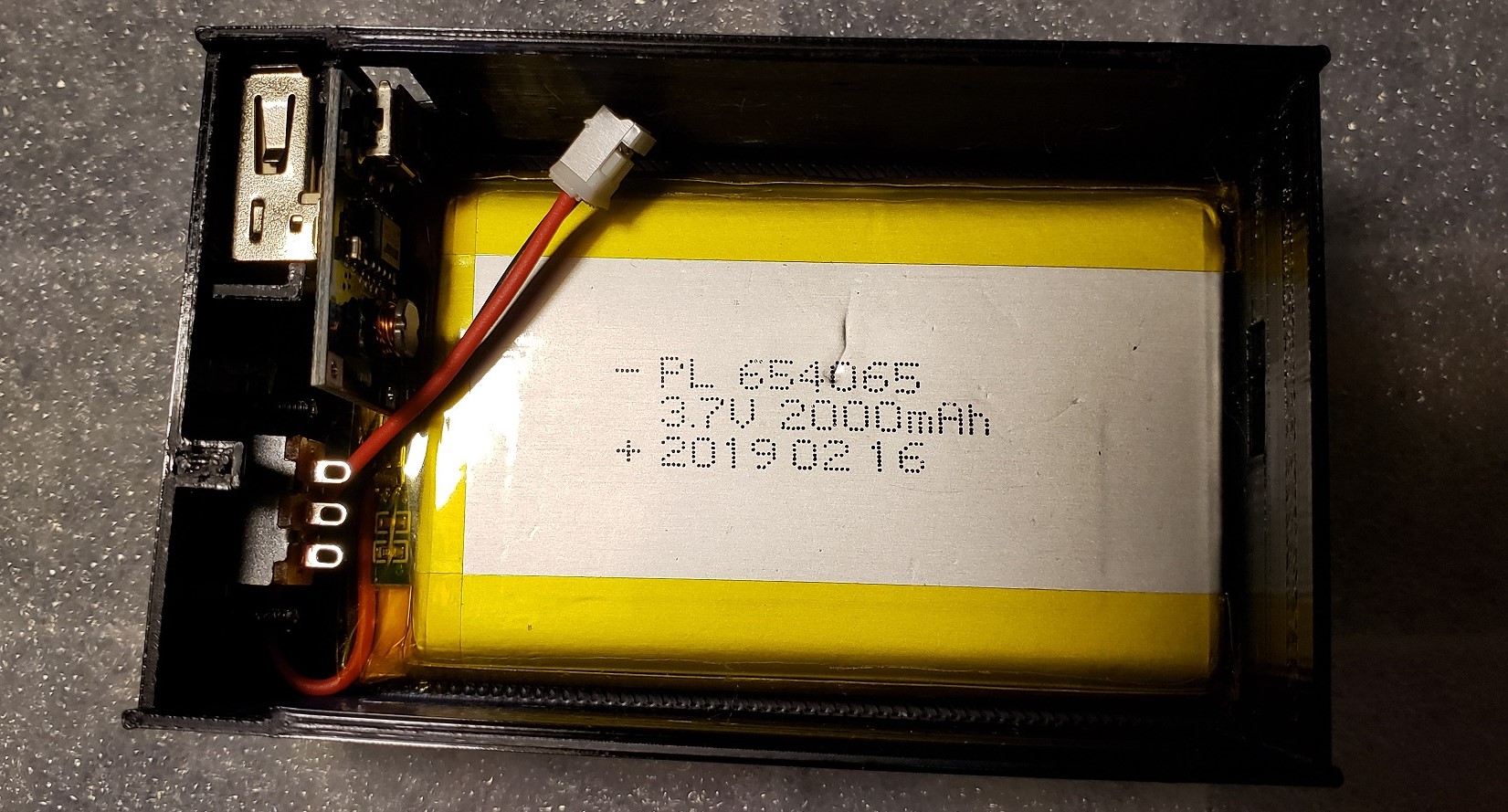
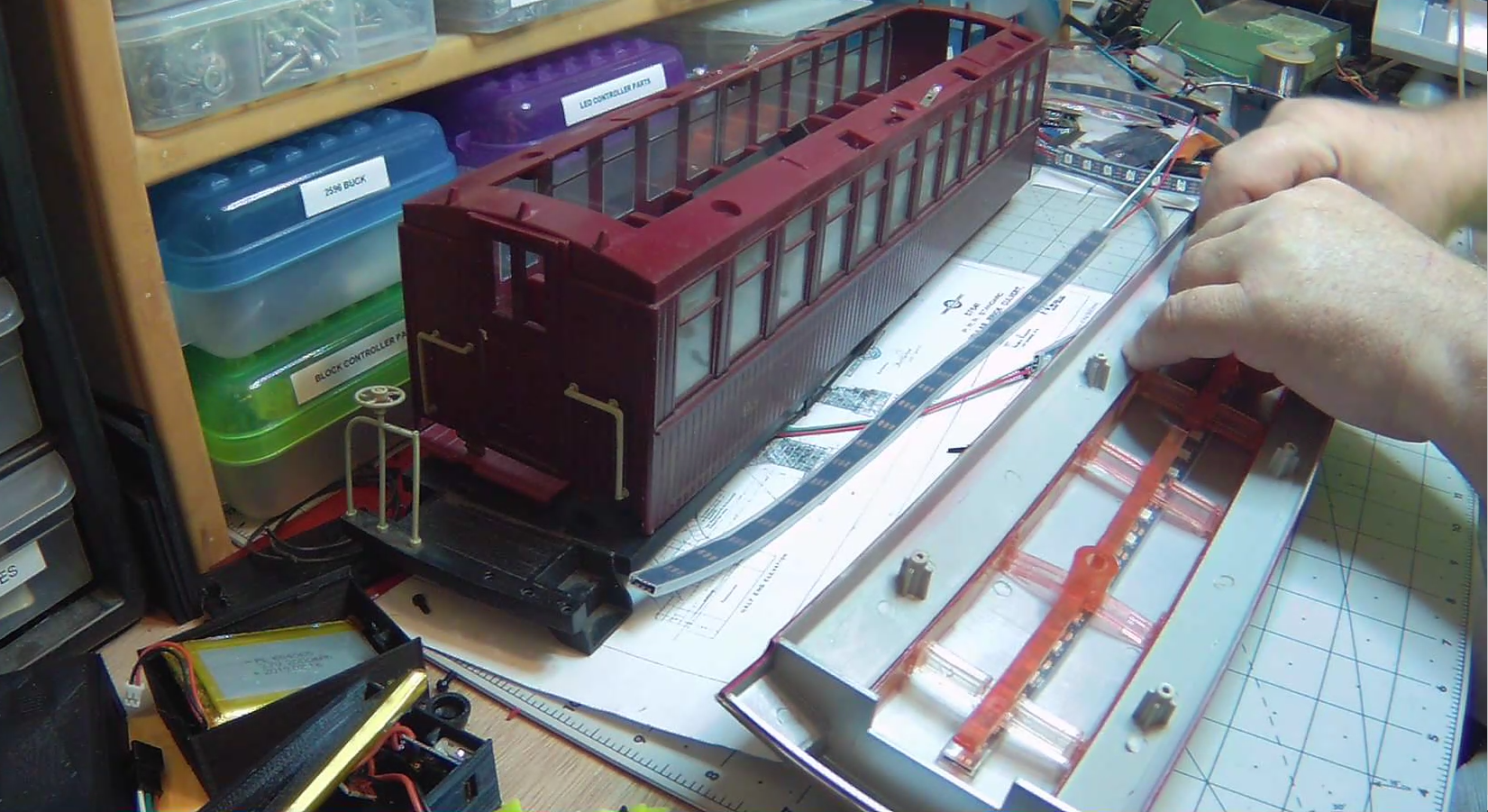
We progressed to LED strip lighting and graduated to individually addressable LEDs.
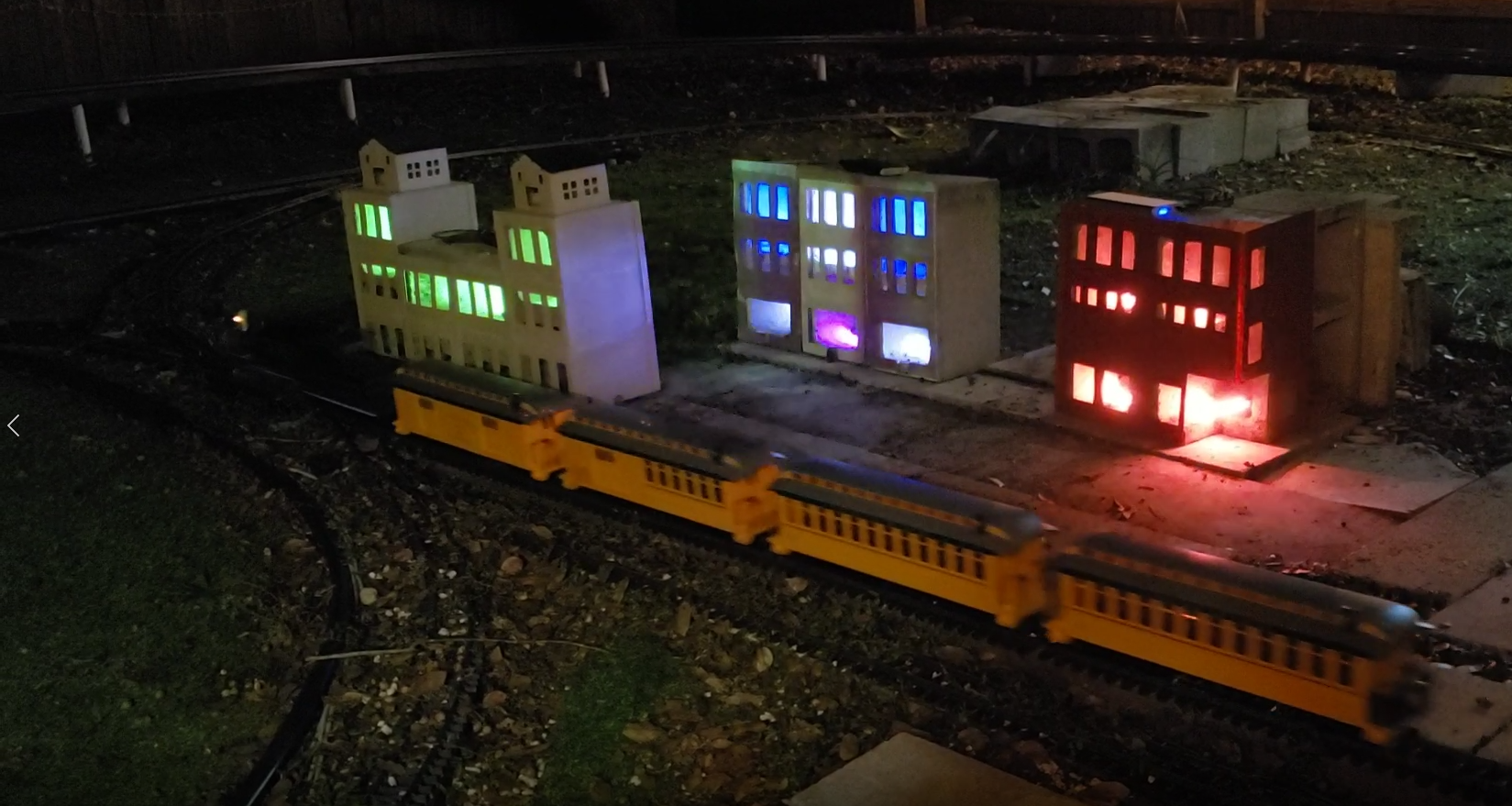
With the idea of christmas lights decorating the train always in the back of our mind, the latest evolution is moving toward miniaturization. Not that our lighting controller isn't small already, it's all about fitting all the electronics in the original 9V battery box, with some modifications of course! The 3D printed ones work just fine, but we don't really need 11 - 12 hours of continuous operation.
That means we don't really need that size battery either. Some of them boast 2800mAH while others just 2000mAH, but compared to the more than 4 hours we get from a 1000mAH battery, I'd say 2800mAH is closer to the mark. The entire reason for the oversized battery box was the size of the battery. The 1000mAH battery fits nicely in the original, with room to spare for the monitor/charge circuit board and a Wemos D1 mini (ESP8266 Arduino).
Unfortunately, I've had nothing but problems with those D1 minis, from issues with Windows drivers not being able to upload new program versions to the controller to failure to serve the web page files reliably via WiFi. When they work, they work well. When they don't, which is most of the time, it's very frustrating to say the least. Already short on time, I don't have any extra to mess around with, "Why doesn't this blasted thing work now?"

The latest evolution of the battery box and controller components.
I try to keep up with the latest innovations, but with the time constraints already mentioned, can't be as thorough as I'd like. Thankfully Nick found these "super mini" versions of the ESP32C3 and ESP32S3 Arduino boards. So when we talk about the "latest evolution", we're talking about replacing the already small Arduino D1 mini boards with even more tiny, and more powerful, versions.